Last updated 2026-08-21
TL;DR
A backflow tester field-tests assemblies that stop contaminated water from reversing into potable lines. There is no national license. You take a board-accepted course, pass written and hands-on exams, get listed where you work, then file local test reports with a calibrated gauge. Confirm fees, recert dates, and forms with that board before you spend a dollar.
What is a backflow tester?
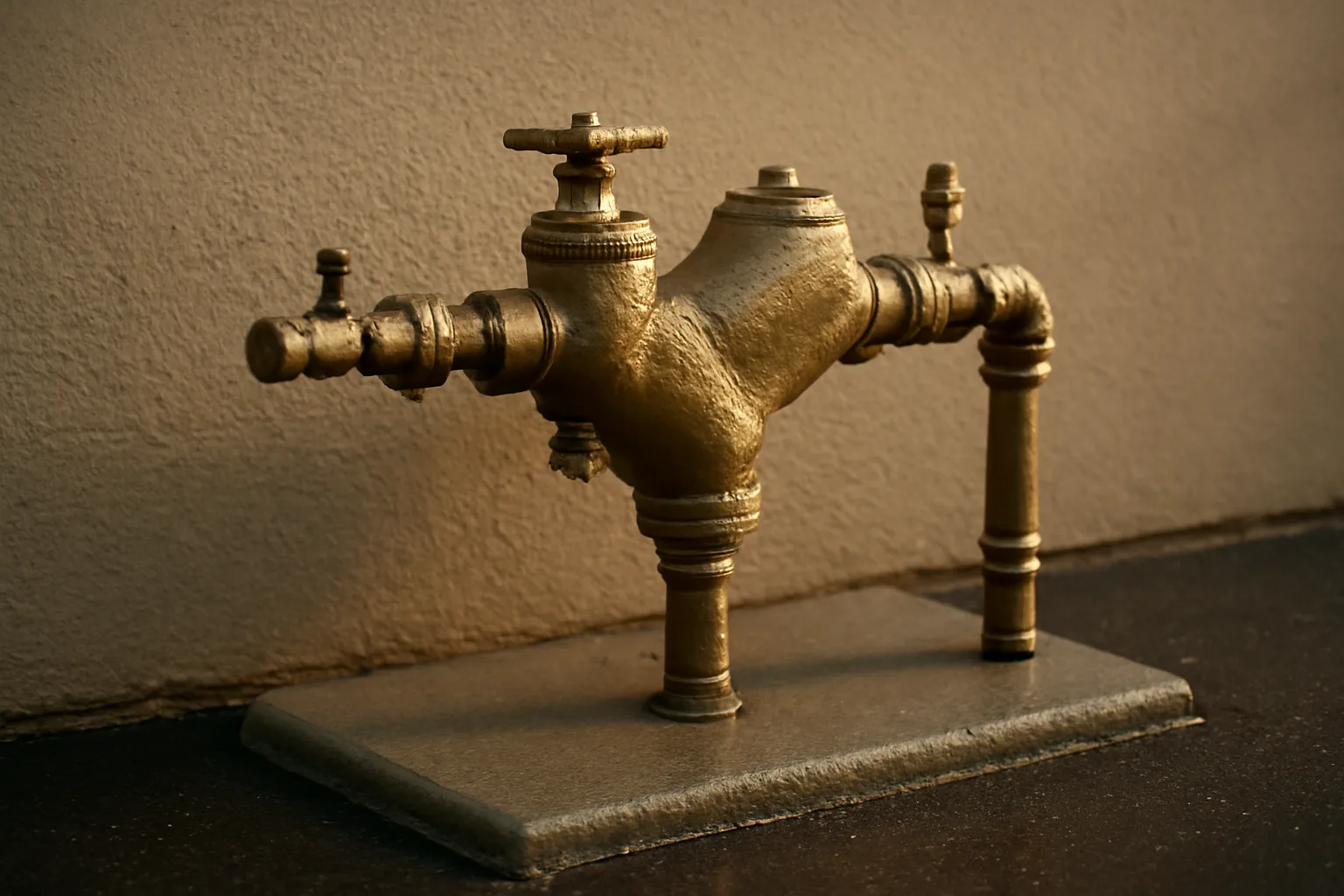
A backflow tester is the person a water purveyor will accept to field-test mechanical assemblies that stop used or contaminated water from running backward into a potable line.
That is the whole job. You are not the health officer. You are not the cross-connection program. You hook a differential pressure gauge to an RP, a DCVA, a PVB, or an SVB, you write the readings the local form asks for, and you sign your name and credential number.
The EPA Cross-Connection Control Manual puts the hazard in plain language. "Backflow is the undesirable reversal of flow of water or mixtures of water and other liquids, gases, or other substances into the distribution pipes of the potable supply of water from any source or sources." [1]
Two physical ways that happens. Backsiphonage, when line pressure drops after a main break or a hard fire flow and the system sucks. Backpressure, when a boiler, a pump, or an elevated tank pushes harder than the city main. Assemblies exist because a hose in a mop sink or a chemical injector can become the path.
Public water systems sit under the Safe Drinking Water Act. The Act does not license testers. It sets the federal frame that states then write into their own cross-connection rules. [9]
Call it plumbing and you have never stood in a meter pit in January with a wet gauge. It is plumbing-adjacent. The paper trail is closer to a field inspection than to a pipe install.
California's own definitions sit in Title 17. They treat approved backflow preventers as a public-health control, not as optional hardware. [10] A backflow tester is the field person who proves those controls still hold.
How do you start as a backflow tester?
You start local. Pick the water system or state board that will actually accept your tests, then take the course that board names. That is the entire first move.
There is no federal tester card. The usual path is a multi-day class built on an ASSE 5110 tester outline or a USC FCCCHR-style track, a closed-book written exam, and a hands-on practical on real assemblies. After you pass, you apply for the state license or the utility list that matches the zip codes you can drive.
Texas is the cleanest example of a statewide occupational license. TCEQ runs a Backflow Prevention Assembly Tester license with its own application, exam, and renewal rules. Read that page before you pay a school that is not on their accepted list. [6]
Washington writes the duty onto the purveyor. WAC 246-290-490 says the purveyor shall protect the public water system from contamination due to cross-connections, and the tester you become is a piece of that program, not a freelance badge you invent. [2]
Florida puts the program duty on community water systems. Rule 62-555.360 requires those systems to establish and implement a cross-connection control program that detects cross-connections and prevents backflow into the water system. [4] Your start there is usually a utility-accepted course plus a slot on that utility's tester roster.
Do not buy three out-of-state cards before you have one customer. Get listed in a single city, finish a season of real tests, then expand. Schools that sell a "works everywhere" story are selling a myth. Compare how neighboring rules actually differ in backflow tester guide 11 before you spend.
Is there a national backflow tester license?
No. There is no national backflow tester license, and no federal tester ID that every water department must honor. Anyone who tells you otherwise wants your tuition.
ASSE 5110 is a professional qualifications standard many schools teach to. USC's Foundation for Cross-Connection Control and Hydraulic Research has its own tester track and a widely used manual. Those are training and listing systems. They are not a substitute for the statute or utility rule in the place you will sign a report.
California never built a single state tester card the way Texas did. Title 17 puts testing and maintenance on the water user and makes the water supplier assure the work gets done. [3] The supplier decides which credentials it will accept. That is why two neighboring cities can reject each other's testers.
New York's rule is written to the supplier too. 10 NYCRR 5-1.31 requires the supplier to protect the system from cross-connections and to have an acceptable control program. [7] Testers work inside that program. They do not float above it.
A vendor waves a wallet card and swears every fire marshal and every water clerk will take it. Walk. Keep the course certificate. Then complete the local application the board or purveyor actually posts.
What license or listing do you actually need?
You need whatever credential the authority that receives the test report will file. That authority is usually a state drinking-water program, a county health unit, or the water purveyor itself.
Texas: a TCEQ BPAT license if you want to test in public-water jurisdiction there. The agency publishes the license page. Fees, exam vendors, and renewal cycles change. Confirm them on that page, not on a forum screenshot. [6]
Washington: a tester certification the Department of Health will recognize under the WAC 246-290-490 program. The purveyor still owns the cross-connection program. You are an accepted tester inside it. [2]
Virginia writes containment and program duties into 12VAC5-590-580. The waterworks has to run cross-connection control. Your tester status is whatever that waterworks and the state board currently accept. [8]
Massachusetts puts drinking-water duties in 310 CMR 22.00. Cross-connection pieces live in that chapter. Confirm tester acceptance with the MassDEP program and the local water board together. [12]
Some cities also want a plumbing license if you will repair, not test only. Testing and repairing are different tickets in a lot of places. Do not assume your tester card lets you rebuild a relief valve. For a side-by-side of credential styles, use backflow tester guide 17.
What paper do testers fill out on a job?
The water purveyor's test report. Not a generic PDF you found at 1 a.m.
A usable report names the assembly make, model, size, serial number, and location. It records line pressure, the differential across each check, relief-valve opening on an RP, and a clean pass or fail. It carries your printed name, signature, credential number, gauge serial, and the last calibration date. The customer gets a copy. The purveyor gets a copy. You keep a copy.
California Title 17 is blunt about the maintenance duty. Section 7605 tells the water supplier to assure that adequate maintenance and periodic testing are provided by the water user so the assemblies keep working. [3] Your report is how the supplier proves that happened.
Texas distribution rules in 30 TAC 290.44 set the backflow-prevention frame for public water systems, including limits on uncontrolled connections to nonpotable processes. [5] The field form is how a BPAT shows a specific assembly still meets that frame.
Failed test? You do not make it pass on the clipboard. You mark the fail, you notify the customer and the purveyor the way the local rule says, and a person with the repair credential does the rebuild. Then you retest.
Digital portals exist in some cities. Paper still wins in a surprising number of meter shops. Ask the clerk which file name they will actually open. A longer form comparison sits in backflow tester guide 23.
How often do backflow assemblies get tested?
At least once a year is the default, and in California it is written down. Title 17 section 7605 requires backflow preventers to be tested at least annually, or more often if the health agency or water supplier says so. [3]
Other states leave the interval to the purveyor's program, then the purveyor copies the annual habit. Washington's WAC 246-290-490 makes the purveyor run a real program, which in practice means scheduled tests, not a one-time install inspection. [2] Florida's 62-555.360 does the same at the community-system level. [4]
High-hazard sites get shorter intervals. Hospitals, chemical plants, and some irrigation with pumps are the usual examples. That shorter interval is a local call. Nobody has a clean national dataset of actual field intervals. The closest binding number you can quote without guessing is California's annual floor in 17 CCR 7605. [3]
New assemblies get tested on install, then they enter the cycle. After a repair, you test again before you call it in service. Do not let a customer talk you into "we'll catch it next spring" on a fail. That is how testers lose their slot on the list.
What tools and gauge rules apply in year one?
You need a 5-valve differential pressure test kit, fittings that match the test cocks you will see, and a calibration record the purveyor believes.
Most lists want the gauge calibrated at least annually, sometimes more often if you dropped it. The sticker on the case is not decoration. Clerks look at it. A gauge that is out of cal makes every report you signed during that window look dirty.
You also need lockable shutoffs in your head, more than in the truck. You are isolating an assembly that may be the only protection on that service. If you cannot put the building back in water, you should not have opened the test cocks.
Safety is dull and real. Meter pits collect gas and water. Parking-lot RPs sit in traffic. Spend money on a gas meter and a decent light before you spend it on embroidered shirts.
If you want forms, gauge logs, and an ASSE 5110/5115-oriented paper stack in one place, ASSEPath sells a $149 one-time Tester Kit. The legal path still runs through the board. The kit does not replace a license.
Tool brands are a religion. Buy a kit your instructor will let you use on the practical, then keep that same kit calibrated. Switching gauges every month is how first-year testers lose track of which serial number went on which report. More kit comparisons live in backflow tester guide 29.
How much does it cost to get started?
I will not invent a tuition, a state fee, or a processing time. Those numbers move, and fake ones are how people get burned.
Budget four buckets. The course and exam the board names. The license or listing fee that board posts. The gauge, fittings, and first calibration. Insurance sits in the fourth bucket if the utility will not put you on the list without a certificate of insurance.
Course prices vary by state and by whether the school includes the practical assemblies. Confirm the current price with a provider the board lists. Confirm the license fee on the board's fee page. TCEQ, for example, publishes BPAT license information on its own licensing page. Use that, not a blog. [6]
A second-state card before you have work is a common waste. So is a premium "business-in-a-box" that reprints public forms and calls it a franchise. Pay for training the clerk will recognize. Pay for a gauge you can calibrate. Skip the rest until invoices exist.
Repair parts are not a tester cost unless you also hold the repair credential. Do not stock rebuild kits you are not allowed to install. That inventory expires, and it tempts you to cross a line the board cares about.
What does first-year work actually look like?
Ugly parking lots. Irrigation clocks set wrong. Property managers who lost the last report. A few clean mechanical rooms that make you think the job is easy, then a flooded pit that corrects you.
You will spend as much time hunting serial numbers and shutoff handles as you spend reading a gauge. Commercial sites batch well. One shopping center can be a full morning if the as-builts are a lie. Residential irrigation is mileage and gate codes.
The EPA manual is still the federal-level explainer most programs point at when they train staff. It is dated 2003 (EPA 816-R-03-002). It is not your field form. It is the reason the field form exists. [1]
CDC still publishes drinking-water outbreak surveillance. That is the public-health backdrop, not your daily checklist. You are there so a cross-connection stays a near miss instead of a boil-water notice. [13]
First-year testers underprice travel and overpromise same-day PDFs. Book fewer sites and write cleaner reports. Purveyors drop testers who submit incomplete serials, missing cal dates, or pass marks on assemblies that obviously will not hold.
Fire-line assemblies are a special headache. Some jurisdictions want a fire-specific tester endorsement or a fire contractor on site before you close OS&Y valves. Ask before you put a building's sprinkler out of service. A comparison of fire-line quirks is in backflow tester guide 41.
Which states treat testers differently?
All of them, in the details that matter. The table is the honest version. Confirm every cell with the board before you act on it.
| Place | What testers usually hold | Test interval you can cite | Where to confirm |
|---|---|---|---|
| California | Supplier-accepted credential (no single state tester card) | At least annually under 17 CCR 7605 [3] | Water supplier and Title 17 |
| Texas | TCEQ BPAT license [6] | Per 30 TAC 290.44 and the local program [5] | TCEQ licensing page |
| Washington | DOH-recognized tester inside the purveyor program | Set by the WAC 246-290-490 program [2] | WA DOH and the purveyor |
| Florida | Utility-accepted tester on the system roster | Set by 62-555.360 and the utility [4] | FDEP rule plus the utility CCC packet |
| New York | Tester accepted under the supplier's 5-1.31 program [7] | Set by the supplier program | County health and the supplier |
| Virginia | Tester the waterworks will file under 12VAC5-590-580 [8] | Set by the waterworks program | VDH Office of Drinking Water |
Texas built an occupational license. California built a supplier duty. Florida built a community-system program duty. Treat those as the same paperwork and you will mail the wrong form to the wrong clerk.
Interstate work is possible. It is not automatic reciprocity. You redo the local list. Sometimes you redo the practical. Read backflow tester guide 59 if you are weighing two states at once.
What first-year mistakes waste money?
Paying for a national-looking certificate the local list does not name. That is the big one.
Buying a second gauge before the first one is calibrated. Skipping insurance until a city clerk asks for the COI and you lose a week of irrigation season. Testing fire services without the fire ticket the site needs. Signing a pass on a leaking number 2 check because the customer is standing there.
Another waste is reprinting someone else's form and hoping the purveyor will retype it. They will not. Use their portal or their PDF.
Skip most lead-gen services that sell "backflow leads." The real book of business is the water department's tester list and the property managers who already got a past-due letter. Cold Facebook ads for annual tests are a grind with a bad close rate.
Keep CE simple. Take the recert class the same board already accepted. Random online hours that do not match the regulation are hours you paid for twice. For recert comparisons, see backflow tester guide 71.
Where do you confirm board rules before you spend?
On the regulation and the program page, not on a course sales deck.
California testers start with 17 CCR 7605 and the local water supplier's CCC packet. [3] Texas testers start with the TCEQ BPAT page and 30 TAC 290.44. [6] [5] Washington testers start with WAC 246-290-490. [2] Florida testers start with Rule 62-555.360 and the utility's written program. [4] New York testers start with 10 NYCRR 5-1.31. [7] Virginia testers start with 12VAC5-590-580. [8]
The Safe Drinking Water Act is background, not your application. [9] Massachusetts testers should open 310 CMR 22.00 and then call the local board. [12]
No approval timeline is honest if I invent it. Boards batch applications. Utilities close lists in the spring. Ask them.
ASSEPath is an independent publisher, not a law firm and not a service company. If you still want the $149 kit after you have read the board page, it is at /start. The article works without it. Confirm the rest with the board that will stamp your reports. A last set of side-by-side notes is in backflow tester guide 77.
Frequently asked questions
What is a backflow tester?
A backflow tester is the field person a water purveyor or state board accepts to test prevention assemblies on potable services. You record gauge readings on the local form and sign your credential number. You are not the cross-connection program itself. The EPA manual defines backflow as an undesirable reversal of flow into distribution pipes. Confirm who may sign reports with the local board.
How do you start as a backflow tester?
Pick the jurisdiction that will accept your reports. Take the course that board or purveyor names, pass the written and hands-on exams, then apply for the state license or utility list. Texas uses a TCEQ BPAT license. Many other places use a supplier roster. Do not buy a "national" card and assume it files. Confirm fees and forms with that board before you pay a school.
Do you need a plumber license to test backflow?
Sometimes. Testing and repairing are separate in a lot of cities. A tester card may let you test only. Rebuilds often need a plumbing license or a repairer credential. Ask the purveyor and the plumbing board both. Do not open an assembly body until that answer is in writing. Failed tests still need a documented retest after the legal person makes the repair.
Is ASSE 5110 enough in every state?
No. ASSE 5110 is a professional qualifications standard many schools teach to. It is not a federal license. Texas still wants the TCEQ BPAT path. California suppliers still decide whom they accept under Title 17. Use the 5110 outline to prepare, then complete the local application. A wallet card with an ASSE logo does not bind a water clerk.
How long is backflow tester school?
Most board-accepted classes run several days, with lecture plus a practical on real assemblies. I will not invent an hour count, because states and schools set their own. Ask the provider the board lists for the current outline and the exam vendor. Online-only classes fail in places that require a proctored hands-on. If the practical is optional, that school is probably wrong for field work.
How often do you calibrate a test gauge?
Annual calibration is the common list rule. Some purveyors want tighter intervals if the gauge was dropped or repaired. Put the gauge serial and the cal date on every report. An out-of-cal gauge can void a season of signatures. Keep the lab certificate with your files. Confirm the interval on the tester packet for each city you serve, because they do not all match.
Who gets the backflow test report?
The customer, the water purveyor, and you. Some cities also want a county health copy. Use the official form or portal. A homemade PDF often gets rejected. Include make, model, size, serial, location, readings, pass or fail, your credential number, and gauge cal data. Incomplete serials are the usual bounce. File the fail the same day if the local rule says so.
Can one backflow tester card cover two states?
Rarely as automatic reciprocity. You usually apply again, and you may sit another practical. Texas will want the TCEQ license for public-water work there. A California supplier list does not move across the state line by itself. Add the second state only after the first book of accounts is real. Confirm both boards in writing before you advertise the second service area.
What is the difference between an RP and a DCVA?
A reduced pressure principle assembly (RP) has two checks and a relief valve that dumps to atmosphere if the zone pressure goes wrong. It is the usual pick for high hazard. A double check valve assembly (DCVA) has two checks and no relief dump. It is used on lower hazards where the program allows it. The local CCC plan, not the customer, picks the type. You test the assembly that is installed.
Do backflow testers need insurance?
Many utility lists ask for general liability before they add your name. Some want the city named as additional insured. I will not invent a limit. Read the tester application. Insurance is not a substitute for a license. It is a clerk requirement. Get the certificate in the exact legal name you put on reports, or the list will bounce you during irrigation season.
What happens when an assembly fails the test?
You mark the fail. You do not pencil a pass. Notify the customer and the purveyor the way the local rule requires. A person with the repair credential fixes it. You retest and file the new report. Leaving a failed RP in service because "they will get to it" is how testers lose listing. High-hazard fails can trigger a water shutoff under the supplier's program.
How often do tester credentials expire?
Boards use multi-year cycles and CE. I will not invent your expiration date. Read the card and the regulation that issued it. TCEQ posts BPAT renewal on its licensing page. Other states bury it in the drinking-water chapter. Missed CE is a common first-year surprise. Put the recert class on the calendar the week you pass the original exam.
Can a new tester work on fire-line backflow assemblies?
Only if the jurisdiction lets a domestic tester close those valves. Some cities want a fire-specific endorsement or a fire contractor on site. Putting a sprinkler riser out of service without that okay is a bad first-year move. Ask the fire marshal and the water purveyor before you book the job. If either one hesitates, decline and send a qualified crew.
Is online-only backflow tester training accepted?
Often no, because the practical is the point. A board that requires hands-on work on RP and DCVA assemblies will reject a click-through certificate. Hybrid classes that keep a proctored bench test can be fine. Confirm with the same office that will stamp your listing. If the sales page avoids naming that office, pick another school.
Sources
- U.S. EPA, Cross-Connection Control Manual (EPA 816-R-03-002): Defines backflow as an undesirable reversal of flow into potable distribution pipes and sets out program and assembly concepts testers work inside.
- Washington State Legislature, WAC 246-290-490 Cross-connection control: Requires purveyors to protect the public water system from contamination due to cross-connections and to run a cross-connection control program.
- California Code of Regulations, 17 CCR § 7605 Testing and maintenance: Requires the water supplier to assure maintenance and periodic testing, and requires backflow preventers to be tested at least annually.
- Florida Administrative Code, Rule 62-555.360 Cross-Connection Control for Public Water Systems: Requires community water systems to establish and implement a cross-connection control program to prevent backflow into the water system.
- Texas Secretary of State, 30 TAC §290.44 Water Distribution: Sets Texas public-water distribution rules on backflow prevention and uncontrolled connections to nonpotable processes.
- New York State Department of Health, 10 NYCRR §5-1.31 Cross connection control: Requires the water supplier to protect the system from cross-connections under an acceptable control program.
- Virginia Administrative Code, 12VAC5-590-580 Cross-connection control and backflow prevention: Requires waterworks to maintain cross-connection control and backflow prevention as part of drinking-water rules.
- Cornell LII, 42 U.S.C. §300f (Safe Drinking Water Act definitions): The Safe Drinking Water Act is the federal statute that frames public water-system regulation; it does not itself license backflow testers.
- California Code of Regulations, 17 CCR § 7583 Definitions: Sets Title 17 definitions used in California's drinking-water cross-connection and backflow-prevention rules.
- Massachusetts, 310 CMR 22.00 Drinking Water Regulations: Massachusetts drinking-water regulations (310 CMR 22.00) are the numbered chapter that includes cross-connection control duties.
- CDC MMWR, Surveillance for Waterborne Disease Outbreaks Associated with Drinking Water, United States, 2013 to 2014: CDC publishes surveillance for drinking-water associated disease outbreaks, which is the public-health reason cross-connection programs exist.