Last updated 2026-08-21
TL;DR
A backflow tester is the person a water purveyor accepts to field-test prevention assemblies and file the report. There is no federal tester license. You take a course the utility lists, pass written and hands-on exams, get listed, and keep the gauge calibrated. Confirm every form with the board that takes your paper.
What is a backflow tester?
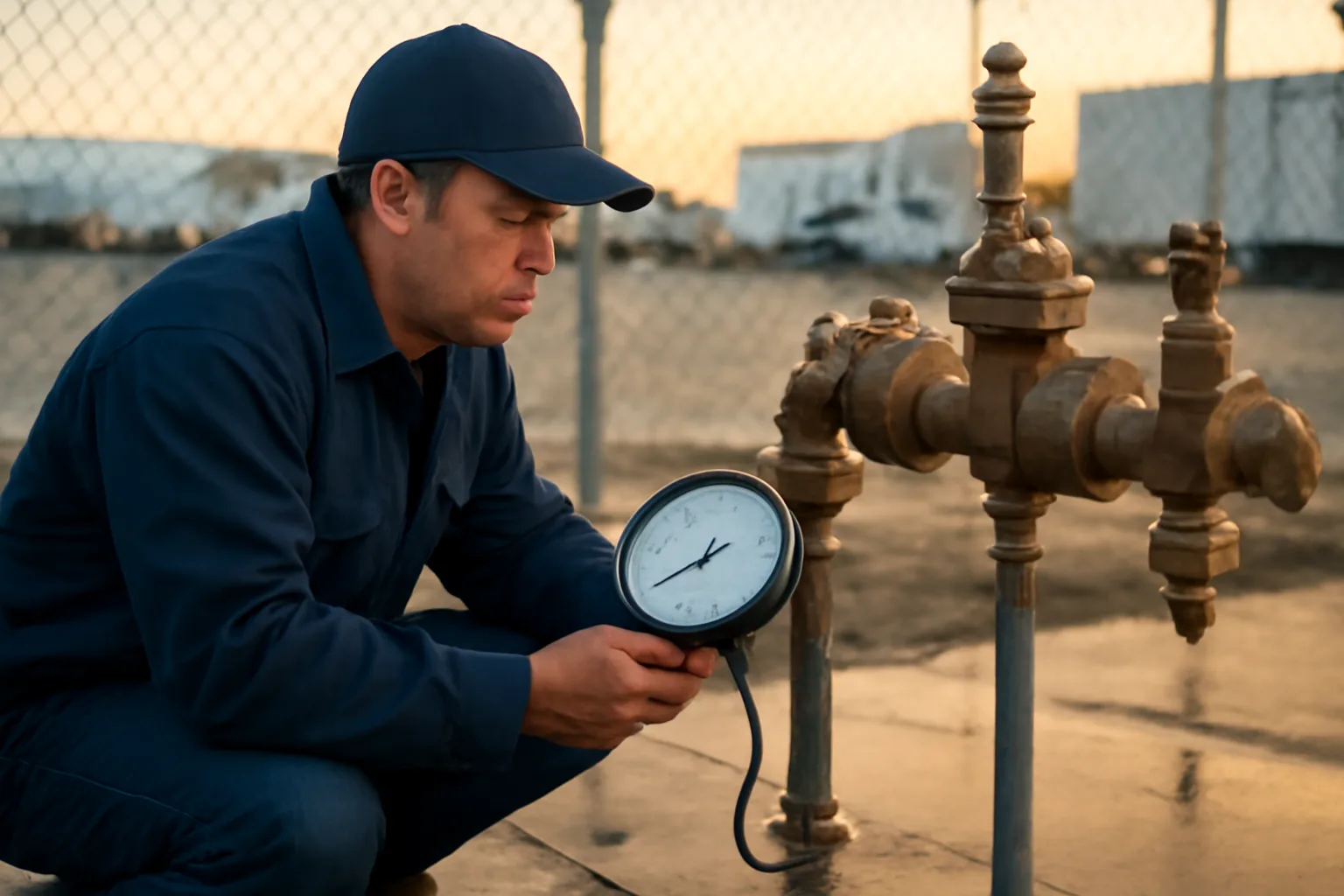
A backflow tester is the person a public water system will accept to field-test a backflow prevention assembly and turn in a report that system can keep. You hook up a differential pressure gauge, run a field procedure the jurisdiction recognizes, and record pass or fail. You are not a federal licensee. EPA does not issue tester cards.
The work exists because potable water can reverse under backpressure or backsiphonage. EPA's Cross-Connection Control Manual (EPA 816-R-03-002) states: "Backflow is the undesirable reversal of flow of water or mixtures of water and other liquids, gases, or other substances into the distribution pipes of the potable supply of water from any source or sources." [1]
Water systems run this work under state drinking water rules. Washington's WAC 246-290-490 tells the purveyor to protect the public water system from contamination due to cross-connections. [2] Florida community water systems must establish a routine cross-connection control program under Rule 62-555.360. [3] Texas puts backflow rules in 30 TAC 290.44. [4]
So the job is local paper. A tester who cannot get onto a utility's accepted list is not testing for that utility, no matter what logo is on the wallet card. National ads skip that part.
Day to day you book tests (often annual), run the procedure, write the result, and get the report to the owner and the water system on time. Failures turn into repair and retest. Tester and repairer are not the same card in a lot of places. Ask which water department will take the report before you pay for a class.
How do you start as a backflow tester?
You start by finding the water systems you want to file with, reading their tester list, and taking only the course and exam that list already names. Then you pass written and hands-on tests, submit whatever application that utility or state board uses, get listed, and put a current gauge calibration certificate in the same folder as your card. There is no national start button.
Do this in order. Pull the approved tester page from two or three nearby purveyors. Write down the exact credential names they print (ASSE 5110, ABPA tester, a state BAT card, a named school). Call the clerk if the PDF is old. Then enroll where those names match. Passing a class no local office has heard of wastes a week and the tuition.
After the exam, file whatever that board or utility actually wants. Some want a state application. Some want you on a city list only. Some want both. Processing time is not something I will guess. Confirm it with the office that stamps the list.
Buy or borrow a differential pressure gauge and get it calibrated before your first paid test. Keep the cert in the truck. Many utilities will bounce a report if the gauge date is stale, even if your tester card is pretty.
I would not print 500 business cards first. I would not form an LLC first unless your accountant already wanted one. I would get listed, complete a handful of tests the utility accepts, and only then spend money on branding. First-year operations are listing, gauge, reports, and not getting your paper kicked back.
Is there a national backflow tester license?
No. There is no federal backflow tester license, quota, or EPA wallet card. The Safe Drinking Water Act sets the frame for public water systems. It does not license testers. [10] States and local purveyors write the tester rules you actually live under.
People sell "national certification" because the phrase sounds clean in ads. A private group can test you and print a card. That card matters only if a water department, county, or state health office says it matters. ASSE Series 5000 is a professional qualifications standard used in a lot of course catalogs. [9] It is still not a federal license.
Washington is a clean example of the real path. WAC 246-290-490 requires the purveyor to protect the public water system from contamination due to cross-connections, and the tester piece sits inside that state program, not inside a U.S. tester bureau. [2] New York puts cross-connection control on the supplier of water in 10 NYCRR 5-1.31. [5] Oregon does it in OAR 333-061-0070. [6]
If a school says the card works in all 50 states, ask them to name the water departments. Then call those departments. I have seen testers hold three private cards and still wait on a city listing form. The listing is the job.
Treat every out-of-state promise as unproven until a clerk on the receiving end says yes. Reciprocity exists in some places and does not exist in others. Confirm with the relevant board. Nobody has a complete national map that stays current.
What paper do water systems actually accept?
They accept the credential they printed on their own tester list, plus a report form they recognize, plus proof the gauge was calibrated. That is the whole trick. If those three pieces do not match their file, your field work did not happen as far as they are concerned.
Common credential names you will see on lists: ASSE 5110 tester, ABPA tester, a state-certified backflow assembly tester (BAT), or a certificate from a school the utility named. USC Foundation field test procedures still show up in a lot of training because water departments grew up on that manual. [8] Training on USC methods is not the same thing as USC licensing you.
Report paper is petty on purpose. Some utilities want their PDF only. Some take a state form. Some want electronic entry in a portal and will not touch email. I would keep a blank copy of each utility's current form in a folder, and I would throw out last year's version. Clerks notice old headers.
Calibration certificates are paper too. The lab's name, the gauge serial number, the date, and the standard used should be readable. If you cannot match serial numbers from gauge to cert to report, expect a bounce.
Do not mail a stack of reports and hope. Ask how that office wants delivery. Then do that. A clean test with the wrong cover sheet still fails the filing.
Which laws require testing in the first place?
State drinking water rules and local plumbing or utility codes require the program. Testers exist because those programs need field results on assemblies. Federal rules push public water systems to control sanitary defects. They do not hire you.
California 17 CCR 7605 is a board-confirmable example. It puts testing and maintenance of backflow preventers on a schedule the water supplier enforces, and the usual floor is at least annually. [7] Confirm the current subsection with the State Water Board or the purveyor, because local agencies add tighter intervals for some hazards.
Texas 30 TAC 290.44 is the backflow section inside public drinking water rules. [4] Florida Rule 62-555.360 requires community water systems to establish a routine cross-connection control program to detect and control cross-connections and prevent backflow of contaminants into the water system. [3] Idaho puts public drinking water requirements in IDAPA 58.01.08. [12]
WAC 246-290-490 is blunt: "The purveyor shall protect the public water system from contamination due to cross-connections." [2] That sentence is why Washington testers chase a DOH-recognized path instead of a national myth.
Your takeaway is boring and correct. Read the drinking water rule in the state where the meter sits, then read the utility's CCC program. Plumbing code on a jobsite can add a test at install. The water system still owns the file that keeps the premises connected.
What training and exams do boards confirm?
Boards confirm a named course, a written exam, and a hands-on exam on real assemblies, then they confirm you stay current. They do not confirm a weekend webinar with no gauge time. If the school cannot tell you which water departments take the certificate, pick another school.
ASSE 5110 is the tester designation inside ASSE Series 5000. [9] A lot of community colleges and trade programs teach to it. ABPA has its own tester path. Several states run a BAT program that may accept those private exams, or may insist you sit their test even if you already hold ASSE. I would call the state drinking water office and the two biggest utilities in your county before I paid a deposit.
Hands-on is the part people fail. You will test reduced pressure principle assemblies, double checks, and pressure vacuum breakers under a proctor. Know which procedure that proctor uses. USC Foundation procedures are still the common reference in the field. [8] Arguing about a shortcut during the practical is a good way to retake it.
Prerequisites vary. Some programs want a plumbing license. Some want documented hours. Some take adults with no trade card. I will not invent a prerequisite for your county. Confirm with the school and with the board that will list you.
Recertification is separate from the first card. Many private credentials run on a multi-year cycle with a refresher and a retest. State BAT cards have their own clock. Gauge calibration is usually annual and is not the same event as recertification. Put both dates on a paper calendar.
What does the first year of operations actually take?
The first year takes a listing you can show a customer, a gauge that will survive a clerk's check, time to learn each utility's form, and enough cash to live through slow weeks. It does not take a franchise, a national logo, or a van wrap.
Nobody publishes a clean national average for tester income or for course tuition. Schools quote their own price. Utilities quote their own listing rules. I will not invent a fee, a quota, or a processing time. Confirm those with the school and the board.
Work arrives from building owners, plumbers who do not want to test, fire-line contractors, and property managers who got a notice that an assembly is due. Annual cycles create bunches of calls in the same months. Weather and access (locked mechanical rooms, angry dogs, missing isolation valves) eat hours you cannot bill the way you hoped.
Paper eats hours too. You will retype a report because a serial number was one digit off. You will drive back because the relief valve dumped and the owner wants it tested the same day after a repairer finishes. Budget time for retests.
If you want a binder of study and field paper aimed at ASSE 5110 and 5115 testers, ASSEPath sells a $149 one-time Tester Kit. Skip it if your utility already hands you a packet. Your water department's own forms still win.
Insurance, business registration, and tax setup depend on how you work (employee vs independent). Ask a local broker and a tax person. I am not going to fake a premium.
What tools and calibration records do you need?
You need a differential pressure test gauge made for backflow assemblies, the hose and fitting set that matches the assemblies you will see, tools to remove test cock caps, and a current calibration certificate that matches the serial number on the gauge. That is the kit that matters. Fancy extras can wait.
I would not buy a used gauge without the serial visible and a fresh cert from a lab the local testers already use. Cheap mystery gauges fail at the worst site. Needle bounce and leaking fittings waste a test and can fail you in a proctor's eyes.
Calibration interval is almost always annual unless a utility prints something tighter. Confirm with the listing office. Keep the paper cert, and keep a photo of it. When a clerk asks, you send the photo in the same email as the report.
Repair tools are a different pile. Opening an RP to change a relief valve is repairer work in jurisdictions that split 5110 tester from 5115 repairer. [9] If you are tester-only, do not start rebuilding. You will test, fail it, and hand it to someone who holds the repair credential.
Do not spend money on software until you know whether your utilities even accept exports. A lot of first-year testers do fine with the official PDF, a clipboard, and careful handwriting. Ugly but accepted beats pretty and rejected.
Who takes your reports, and what gets rejected?
The water purveyor takes the report (sometimes the health department too). The building owner gets a copy because they own the assembly. Your file is the third copy. If the purveyor does not have a passing result on time, they have their own next step, which can include notices to the customer. You do not control that step.
Rejections are usually dumb and fixable. Wrong form version. Gauge date expired. Tester number blank. Assembly serial that does not match the last record. Site address that is the billing address instead of the meter address. Line pressure recorded in the wrong box. I would check those six items before I leave the parking lot.
Hazard type and assembly type have to match what the program thinks is on site. If you test a double check and the file says RP, stop and call. Do not "make it work" on paper.
Electronic portals reject incomplete fields with no poetry. If the portal is down, ask the office what they will accept that day. Do not assume email is fine because it was fine at the last city.
Failed tests need a clear fail, a reason, and a plan for retest after repair. Do not coach the owner to ignore a fail. That is how testers lose a listing. Your reputation with one CCC coordinator is worth more than one awkward conversation.
How does renewal work once you are listed?
Renewal is a local clock, not a national one. Private cards, state BAT cards, city listings, and gauge certs expire on different days. Miss one and you are not testable even if the other three look fine.
I would put four dates in writing: tester credential expiration, any state BAT expiration, each city listing renewal if they use one, and gauge calibration. Then I would set a reminder 60 days out. Do not trust a school to email you in time.
State pages differ, which is why testers keep getting surprised. If you work in California, read backflow tester renewal in california before you guess. Florida testers should use backflow tester renewal in florida. Colorado has its own pile in backflow tester renewal in colorado. Alabama is backflow tester renewal in alabama.
Continuing education, a refresher practical, or a full retest may be required. I will not invent hours. Confirm with the body that issued the card you actually use on reports.
If you let a listing lapse, you often reapply from scratch. That can include new fingerprints, new fees, or a new class. Avoid that. Renewing on time is cheaper than explaining a gap to a coordinator who already has a stack of testers.
How do states differ on the tester path?
They differ on who certifies you, whether a plumber license is required, which private cards count, how often assemblies are tested, and whether you also need a local business license. Two testers can hold the same ASSE 5110 card and still not be interchangeable across a state line.
Arizona testers should not copy California habits. Start with backflow tester renewal in arizona for the clock, then call the purveyor for the list. Alaska is thin population and long travel, and the paper is still local. See backflow tester renewal in alaska. Georgia and Connecticut are not the same program either. Use backflow tester renewal in georgia and backflow tester renewal in connecticut as the renewal map, then confirm initial listing with the utility.
Some states put tester rules inside the drinking water administrative code. Some leave more of it to each purveyor. Idaho's public drinking water rules live in IDAPA 58.01.08. [12] Oregon's cross-connection control requirements live in OAR 333-061-0070. [6] New York's supplier duties live in 10 NYCRR 5-1.31. [5]
Reciprocity is a rumor until a clerk says yes. I would never schedule a paid test in a new state based on a Facebook comment. Mail or upload whatever that office wants, wait until you are on the list, then book the job.
If you move, treat yourself as a new tester. Bring transcripts and cards. Still fill out their form.
What should you skip when you are starting?
Skip any program that cannot name the water departments that take its certificate. Skip schools that promise a board will list you no matter what. Skip national franchise pitches. Skip buying two extra gauges before you have failed a listing check for lack of work. Skip repair work if you only hold a tester credential.
Skip arguing with a coordinator about USC versus a house procedure. If they printed a method, use that method. [8] You can dislike it in the truck.
Skip publishing prices on day one that you copied from another state. Their listing fees, their hazards, and their drive times are not yours. Confirm costs with your own board and your own customers.
ASSEPath is an independent publisher, not a law firm and not a service company. Nothing here is a promise that a board will accept you. If you still want the optional kit path after you have read your utility's list, go to /start. Read the state rule first either way.
The useful first-year stack is small. A course the list already names. An exam. A listing. A gauge with a current cert. The current report form. A habit of calling the office when a PDF looks stale. That is the whole business until it is not, and you will know when it is not because the same coordinators will start sending you more sites.
Frequently asked questions
What is backflow tester?
A backflow tester is the person a water purveyor will accept to field-test backflow prevention assemblies and file the report. You run a gauge on devices such as reduced pressure principle assemblies and double checks, then record pass or fail. EPA does not license testers. The title only works where a local list includes you.
How do you start backflow tester?
Read the approved tester list for the water systems you want to file with. Take only the course and exam those lists name, pass written and hands-on tests, apply for listing, and put a current gauge calibration certificate with your card. Confirm forms, fees, and timing with that board. There is no federal start process.
Do I need a plumber license first?
Sometimes. Some schools and some states want a plumbing license or documented trade hours. Others take adults with no trade card. I will not invent your county's rule. Ask the course provider and the office that publishes the tester list. If they disagree, believe the office that will take your reports.
Is ASSE 5110 enough everywhere?
No. ASSE 5110 is a widely taught tester designation inside ASSE Series 5000, but utilities and state BAT programs decide whether that card gets you listed. Some places want ABPA, a state exam, or a named school. Call the purveyor. A wallet card with no listing does not file a test.
How often are assemblies tested?
Many state programs use a floor of at least annually, and local purveyors can require tighter intervals for higher hazards or after repairs. California 17 CCR 7605 is one annual-testing example. Confirm the interval on the notice the owner received and with the water system that holds the file.
Can I test in more than one state?
Only after each state or purveyor lists you. Reciprocity is uneven and sometimes nonexistent. Carry your course records, but still fill out their application. Do not book a paid test across a state line until a clerk confirms you are on the accepted list they actually use.
What is a BAT card?
BAT usually means backflow assembly tester in a state-run or state-recognized program. It is not a federal term with one definition. Some BAT cards are the only paper a purveyor will take. Others sit on top of ASSE or ABPA. Read the definition in that state's drinking water rules and on the listing page.
Do I need my own test gauge?
You need access to a differential pressure gauge with a current calibration certificate that matches the serial number. Owning one is simpler than borrowing, because clerks check dates. I would not buy used without a visible serial and a fresh lab cert. Confirm the calibration interval with the listing office.
How long is certification good for?
It depends on who issued the card you print on reports. Private credentials, state BAT cards, and city listings can expire on different cycles. Gauge calibration is usually a separate annual event. Confirm each date with the issuer. I will not invent a national expiration.
What is the difference between a tester and a repairer?
A tester field-tests assemblies and files results. A repairer opens and rebuilds them. ASSE splits this as 5110 tester and 5115 repairer in Series 5000. Some jurisdictions let one person hold both. If you only hold tester status, fail the assembly and hand repair to someone who is allowed to do it.
Will EPA certify me?
No. EPA published the Cross-Connection Control Manual as guidance for programs. The Safe Drinking Water Act covers public water systems. Neither one is a tester licensing shop. Your path is the state drinking water office and the purveyor that will take the report.
What forms do I file after a test?
File the form that water system printed, the way they want it delivered (portal, email, or paper). Send the owner a copy. Keep a copy. Include tester number, gauge serial, calibration date, assembly serial, location, and pass or fail. Wrong form versions are a common bounce. Ask before you drive home.
Can I start without a company?
You can start as an employee of a plumbing shop or a testing firm that is already listed, which is the cleaner first year for a lot of people. Independent work adds business registration, insurance questions, and invoicing. Ask a local tax person. Being listed as a tester is separate from having an LLC.
Where do I confirm the current rules?
Confirm with the state drinking water rule that names cross-connection control, plus the water purveyor's tester list and CCC program page. Examples include WAC 246-290-490, Florida 62-555.360, 30 TAC 290.44, 10 NYCRR 5-1.31, and 17 CCR 7605. Do not trust a course catalog over the office that stamps reports.
Sources
- U.S. EPA Cross-Connection Control Manual (EPA 816-R-03-002): Defines backflow as undesirable reversal of flow into potable distribution pipes; federal guidance manual, not a tester license
- Washington WAC 246-290-490 Cross-connection control: Requires the purveyor to protect the public water system from contamination due to cross-connections
- Florida Administrative Code Rule 62-555.360: Community water systems must establish a routine cross-connection control program to prevent backflow of contaminants
- 30 Texas Administrative Code §290.44: Texas public drinking water rules include backflow prevention requirements for public water systems
- New York 10 NYCRR §5-1.31 Cross connection control: Places cross-connection control duties on the supplier of water in New York's drinking water code
- Oregon OAR 333-061-0070 Cross Connection Control Requirements: Oregon public water systems must meet state cross-connection control requirements
- California Code of Regulations Title 17 §7605: Requires testing and maintenance of backflow preventers, with a usual floor of at least annual testing
- 42 U.S.C. §300f Safe Drinking Water Act definitions: The Safe Drinking Water Act frames public water system regulation and does not create a federal backflow tester license
- 40 CFR Part 141 National Primary Drinking Water Regulations: Federal primary drinking water regulations for public water systems sit in 40 CFR Part 141
- Idaho IDAPA 58.01.08 Idaho Rules for Public Drinking Water Systems: Idaho's public drinking water administrative rules are the state-level document testers must confirm for local CCC duties