Last updated 2026-08-17
TL;DR
Alaska has no single statewide backflow tester board. Authority sits with the Alaska Department of Environmental Conservation and, in practice, with individual water systems and municipalities. Most programs want a recognized third-party certification such as ASSE 5110 or an AWWA credential. Costs and exact rules vary by jurisdiction, so confirm with your local water authority or DEC before you spend a dollar.
Do you need a license for backflow testing in Alaska?
Yes, you need a recognized credential. No, it does not come from a single statewide backflow tester board. Alaska is one of a handful of states where authority over cross-connection control is spread out rather than parked in one office. The Alaska Department of Environmental Conservation (DEC) sets the cross-connection control framework under Alaska Administrative Code Title 18, and that framework requires water systems to make sure only certified testers perform backflow assembly tests. [1]
Here is what that means on the ground. Your local water utility, municipality, or water system operator is the entity that decides whose certifications they accept. Anchorage, Fairbanks, Juneau, and the Matanuska-Susitna Borough all keep their own approved-tester lists and program contacts. Some accept ASSE Series 5000 certifications (5110 for backflow tester, 5115 for cross-connection control surveyor). Others take AWWA or American Backflow Prevention Association credentials. A few smaller systems accept state-approved course completion plus a field competency sign-off.
So call your specific water system before spending money on any certification path. Ask two questions. Which certification bodies do you accept, and do you keep an approved-tester list I need to be on? Those two answers drive every decision that follows.
Who actually oversees backflow testers in Alaska?
DEC's Division of Water runs the state drinking water program under the federal Safe Drinking Water Act framework. [2] The state program requires water systems serving more than 25 people to keep a written cross-connection control plan, and that plan has to spell out how assemblies get tested and by whom. DEC audits those plans. DEC does not issue individual backflow tester licenses the way California's state program does. [3]
For licensing purposes, these are the authorities that matter:
- Anchorage Water and Wastewater Utility (AWWU): keeps its own approved tester program and list.
- Fairbanks utilities and the Fairbanks North Star Borough: same local-authority model.
- Juneau: the City and Borough of Juneau utilities office handles approvals.
- Smaller systems statewide: often defer to whoever their licensed water operator endorses, which makes ASSE 5110 a broadly accepted baseline.
If you plan to work across several Alaskan jurisdictions, ASSE 5110 is the safest single credential to hold because the widest variety of water systems recognize it. No Alaska statute or regulation names ASSE specifically. It is simply the credential most commonly listed as acceptable. [4]
Compare that to states with a true centralized board. Arizona's Registrar of Contractors issues a specific backflow endorsement. See how Arizona's model works. Hawaii routes everything through its Department of Health. See the Hawaii approach. Alaska's spread-out model looks more like Idaho's, where local water systems carry most of the authority. See how Idaho compares.
How much does backflow tester certification cost in Alaska?
There is no single state license fee because there is no single state license. You pay for a third-party certification and, separately, any local registration or application fee your water system charges to put you on its approved list.
Here is a realistic breakdown of what candidates spend:
| Cost item | Typical range | Notes |
|---|---|---|
| ASSE 5110 training course (in-person) | $500 to $1,200 | Varies by provider; travel to a training site is often an added expense in Alaska |
| ASSE 5110 exam fee | $150 to $250 | Set by the exam provider, not the state |
| Gauge kit (differential pressure, required for the field exam) | $300 to $700 | A one-time equipment purchase |
| Local water system registration fee | $0 to $150 | Many utilities charge nothing; confirm with your specific system |
| ASSE membership or credential maintenance | $0 to $75/year | Depends on the certifying body's renewal structure |
Most Alaska candidates land somewhere between $950 and $2,200 in the first year, depending on whether they travel for training and what gauge kit they buy. That range is wide, and it is honest. Nobody has published a survey specific to Alaska. The closest verifiable data comes from ASSE International's exam and certification fee schedules, which set the exam cost independently of travel or training. [4]
One thing worth knowing: Alaska geography makes remote and rural candidates pay more, not because the certification costs more but because training providers rarely come to smaller communities. A candidate in Kodiak or Bethel may fly to Anchorage or travel to the lower 48 to sit a certified course. Budget for that before you commit to the path.
How long does becoming a backflow tester take in Alaska?
The certification itself, from starting a course to holding the credential, takes most people four to eight weeks if a training slot is open nearby. The ASSE 5110 program usually runs as a two-to-four-day field training course followed by a written and practical exam on the last day or shortly after. Once you pass, the certifying body processes your results and issues the credential within a few weeks. [4]
Alaska adds time. Training providers do not schedule courses here as often as they do in Seattle or Portland. You may wait two to four months for a course to open within reasonable travel distance, or you may decide to travel to a lower-48 site to get certified faster. Factor that scheduling gap into your plan.
Getting onto a specific water system's approved-tester list is its own step with its own clock. Some utilities process applications inside a week. Others review them quarterly. Call the utility and ask for their current processing window.
Renewal cycles matter too. ASSE certifications run on a three-year renewal cycle and require continuing education hours. AWWA certifications have their own renewal schedules. Put those dates on your calendar from day one so you are not scrambling to recertify right before a big contract.
What is Alaska's cross-connection control regulation and where does it live?
The governing regulation is 18 AAC 80.020 and related sections of Alaska Administrative Code Title 18, administered by DEC's Division of Water. [7] Alaska's public water system regulations fold in cross-connection control requirements that line up with the EPA's national drinking water framework under the Safe Drinking Water Act. [2]
The regulation does not name a certification exam. It requires water systems to use qualified personnel and to show that testers have appropriate training and equipment. The definition of "qualified" falls to the water system operator in most cases, which is exactly why local utility requirements vary so much.
DEC publishes guidance documents and a cross-connection control manual that operators use to build their programs. If you want to understand what a water system's cross-connection plan is supposed to contain, that manual is the most useful reference. It lives on DEC's Division of Water drinking water program page. [1]
For context on how a similarly structured state handles this, Colorado is instructive. Colorado also leans on local water systems for enforcement but has slightly more centralized guidance. See Colorado's framework.
Which certification should you get: ASSE 5110, AWWA, or ABPA?
For most Alaska candidates, ASSE 5110 is the right first choice. It is the most widely recognized credential among Alaskan water systems that publish an accepted-credential list, and it is the credential ASSE International formally defines for the backflow tester role. [4]
AWWA (American Water Works Association) offers a cross-connection control specialist credential, and some larger Alaskan utilities accept it. AWWA's training is solid, and the organization has an Alaska section that occasionally means local training turns up. [5]
ABPA (American Backflow Prevention Association) certifications are accepted in some states but show up less often on Alaskan utility lists. Do not assume acceptance without confirming.
The honest answer: call your target water system, name these three credential bodies, and ask which ones are on their accepted list. That five-minute phone call is worth more than any general guidance article, including this one.
Does Alaska recognize backflow tester certifications from other states?
It depends on the credential, not on Alaska running a formal reciprocity agreement. Because Alaska does not issue its own state backflow tester license, there is nothing to reciprocate in the traditional sense.
If you hold an ASSE 5110 certification issued in California or Florida, that same credential is portable to Alaska because ASSE certifications are national. You do not re-certify. You apply to be added to your target Alaska water system's approved-tester list and present the credential you already have. [4]
State-specific licenses, like Arizona's backflow endorsement under a contractor's license, do not transfer on their own. You would need the underlying third-party certification (ASSE, AWWA, or similar) that the Arizona credential was built on. Confirm with your target Alaska utility whether that underlying credential satisfies their requirement.
For a look at how reciprocity works in states with actual state licenses: Alabama's model and Arkansas's approach both run formal reciprocity processes that look nothing like Alaska's informal portability.
What equipment do you need to test backflow assemblies in Alaska?
The equipment list is the same across the country. You need a calibrated differential pressure gauge kit (people call it a test kit), the correct adapters for the assembly types you plan to test, and a current calibration certificate for the gauge. [4]
Alaska adds a wrinkle most lower-48 guides skip: temperature. Gauge kits have to be stored above freezing and warmed before use in cold conditions, or the readings drift. In Fairbanks in January, a gauge kit left in an unheated truck overnight is a real problem. Buy a case with foam insulation and get in the habit of moving the kit through heated space.
Calibration labs that service backflow gauge kits are available in Anchorage. Remote testers may ship gauges to Anchorage or Seattle for annual calibration. Budget the shipping cost and the downtime if you work rural.
Some certifying bodies require the gauge kit to be calibrated within the last 12 months before your field exam. Check your chosen program's specific requirement before you schedule the exam date.
How do you get on an Alaska water system's approved tester list?
Each water system runs this on its own, so there is no universal answer. The general path looks like this:
1. Get a recognized certification (ASSE 5110 is the most common baseline). 2. Contact the utility's cross-connection control coordinator or their water quality department. 3. Submit whatever they ask for: usually a copy of your certification card, proof of calibrated gauge equipment, and sometimes a liability insurance certificate. 4. Pay any registration fee (often $0 to $100; confirm with the utility). 5. Wait for approval and for your name to appear on their published list.
AWWU in Anchorage is the largest system and runs a formal application process. Smaller systems in rural Alaska may work by phone call and a handshake with the water system operator, though they still keep documentation on file.
If you want commercial work across multiple utilities, hold your ASSE certificate and contact each system one at a time. There is no central Alaska registry that enrolls you everywhere at once. It takes legwork.
What study materials and training actually prepare you for the ASSE 5110 exam?
The ASSE 5110 exam tests whether you can correctly test reduced pressure zone assemblies, double check valves, pressure vacuum breakers, and similar backflow prevention devices. The practical part makes you demonstrate correct procedure on a test rig.
Training courses approved by ASSE or offered through AWWA are the most reliable prep because they give you hands-on time with real assemblies. Self-study alone falls short for most people. The practical exam catches candidates who learned the theory but have never worked real test cocks and gate valves under pressure.
The ASSE International course catalog lists approved providers by region. [4] Alaska has no permanent in-state ASSE-approved provider as of this writing, so most candidates travel to Washington or Oregon for courses. Check the ASSE site for current schedules and any new Alaska-based providers.
If you want structured paper-based prep before a course, ASSEPath's ASSE 5110/5115 Tester Kit ($149, one-time) organizes the documentation and procedural reference material candidates use during self-study. The kit covers the paper path. It does not replace hands-on training. Get both.
Once you pass, the ASSE 5110 certification is valid for three years and requires continuing education for renewal. Plan for that cycle before your credential lapses.
Alaska-specific considerations that out-of-state guides miss
A few things about testing in Alaska that generic guides leave out:
Seasonality. A big share of backflow assembly testing happens during spring thaw and system startup, when water systems bring irrigation lines and fire suppression systems back online after winter. If you are building a business around backflow testing here, expect a heavily seasonal workload across most of the state.
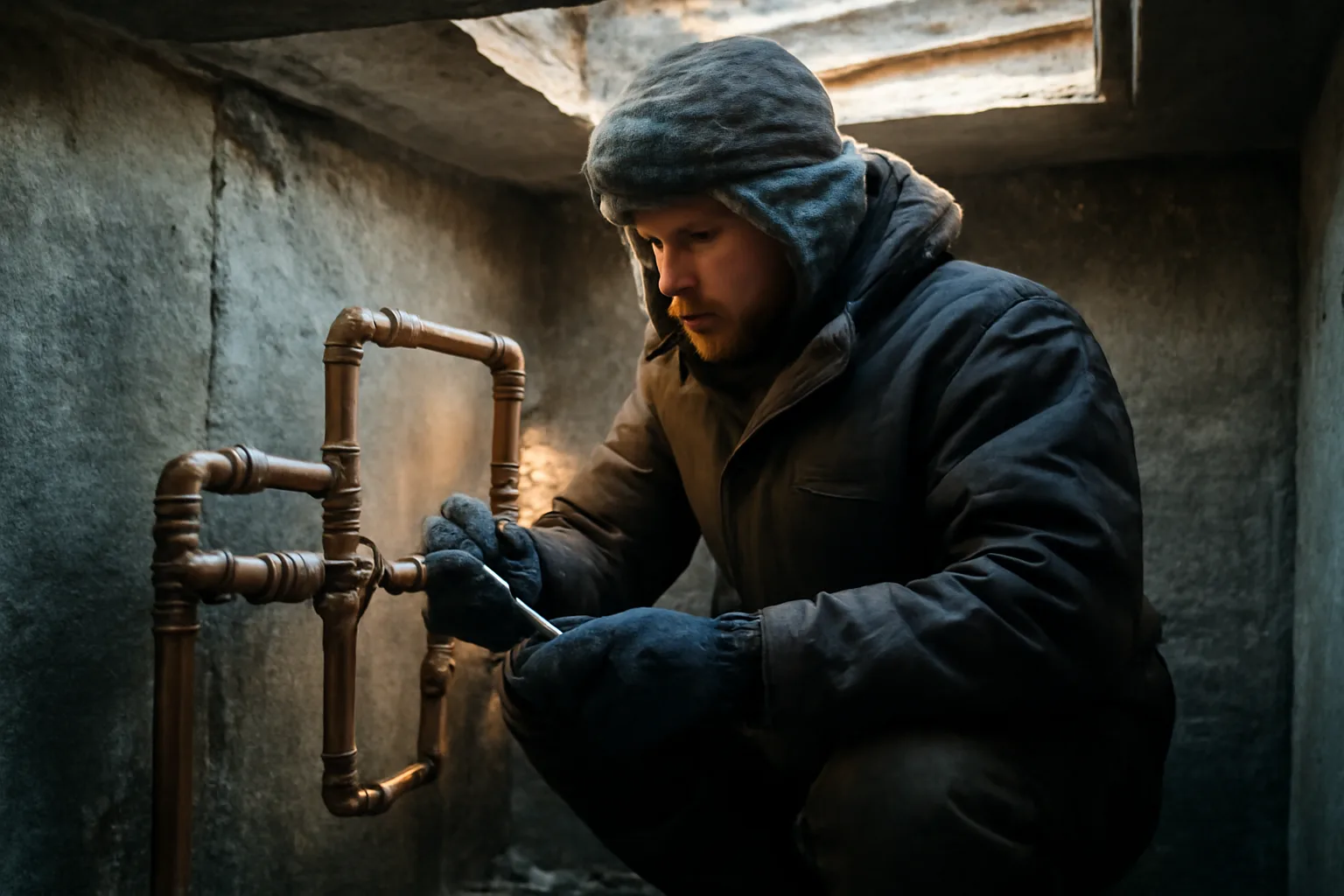
Permafrost and freeze-thaw. Assemblies in Alaska often sit in below-grade vaults or insulated enclosures precisely because of permafrost and freeze risk. Some vaults are cramped or require confined-space protocols to enter. Know your confined-space requirements before you crawl into an enclosed vault. [6]
Fire suppression systems. Alaska sets specific requirements for fire suppression backflow prevention under state fire marshal regulations and local fire codes. Testing those assemblies sometimes means coordinating with the local fire marshal on top of the water utility. Confirm jurisdiction before you start.
Remote access. Work rural, and you may be the only tester within a hundred miles. Some rural systems have no active approved tester at all. That is genuine opportunity and genuine responsibility at the same time. Get your equipment right and document everything, because there is nobody nearby to check your work.
For a contrast on distributed versus centralized models in practice, California's centralized model and Florida's program show how much administrative overhead a single-board system both adds and removes.
Where to start the Alaska backflow tester process right now
The most productive first step is not buying a course or a gauge kit. It is a phone call.
Call the water system you want to be approved by. Ask the cross-connection control coordinator three things: what certification do you accept, what does your application process look like, and how long does approval take. Write down the answers. Then look up course providers for whatever certification they named, find the next class within travel distance, and register.
Not sure which water system to start with? Contact DEC's Division of Water. They can point you to the cross-connection control coordinator for your area or confirm current state guidance on which certifications they consider acceptable under the state program. [1]
For the paper side, ASSEPath's /start page walks through the ASSE 5110 documentation sequence and what testers use during their first year of practice. That is a complement to hands-on training, not a replacement.
Alaska's path is less bureaucratic than states with centralized boards, and that is good news. There is no single bottleneck. The tradeoff is you have to do your own research to find the right local contacts. Do that research first, and the rest of the process gets straightforward.
Frequently asked questions
Do you need a license for backflow testing in Alaska?
You need a recognized certification, most commonly ASSE 5110, but Alaska does not issue a single state backflow tester license. Requirements come from individual water systems and utilities operating under the DEC cross-connection control framework. Contact your target water system to confirm which credentials they accept and whether they keep an approved-tester list you need to join.
How much does backflow tester certification cost in Alaska?
Most Alaska candidates spend $950 to $2,200 in the first year, covering training ($500 to $1,200), exam fees ($150 to $250), and a gauge kit ($300 to $700). There is no state license fee because Alaska does not issue a centralized license. Travel to a training site, often required given Alaska's geography, can add a lot to that total.
How long does it take to become a backflow tester in Alaska?
The certification itself takes four to eight weeks once you are in a course. In Alaska, wait times for open training slots commonly add two to four months because in-state courses are infrequent. After certification, getting on a specific water system's approved-tester list adds days to weeks depending on that utility's process. Plan for three to six months from decision to active practice.
Is there a state board that issues backflow tester licenses in Alaska?
No. Alaska has no dedicated backflow tester board. The Alaska Department of Environmental Conservation sets the cross-connection control framework, and individual water systems decide whose certifications they accept. This distributed model means your credentials get reviewed at the utility level, not by a state-level board.
Which certification is best for working as a backflow tester in Alaska?
ASSE 5110 is the most broadly accepted credential among Alaskan water systems that publish an accepted-certification list. AWWA cross-connection control credentials are also recognized by some larger utilities. Call the specific water system you want to work with and ask which certifying bodies they accept before paying for any course.
Can I transfer my out-of-state backflow tester certification to Alaska?
If your credential is a national third-party certification like ASSE 5110, it is already valid in Alaska without re-testing. You just apply to your target water system's approved-tester list with your existing certificate. State-specific licenses from other states do not transfer directly, but the underlying ASSE or AWWA credential typically does.
Does DEC publish a list of approved backflow testers in Alaska?
Alaska DEC does not keep a single statewide list of approved backflow testers. Approved-tester lists are maintained by individual water systems and utilities. To find out whether a tester is approved in a given service area, contact that water system directly. There is no central public registry.
How often do I need to renew a backflow tester certification in Alaska?
ASSE certifications renew on a three-year cycle and require continuing education. AWWA renewal schedules differ; check your certifying body's current requirements. Alaska does not add a separate state renewal on top of the third-party cycle. Track your expiration date carefully, because working with a lapsed credential can get you pulled off a utility's approved-tester list.
What equipment do I need to pass the backflow tester field exam?
You need a calibrated differential pressure gauge kit with the correct adapters for the assembly types being tested, plus a current calibration certificate dated within the window your certifying body requires. In Alaska, store your gauge kit in heated space to prevent cold-driven inaccurate readings, and budget for calibration shipping if you are not near Anchorage.
Are there backflow tester training courses offered in Alaska?
In-state ASSE-approved courses are rare in Alaska. Most candidates travel to Washington or Oregon for training. AWWA's Alaska section occasionally organizes training events. Check the ASSE International course catalog and AWWA's schedule for current offerings before assuming you have to fly to the lower 48.
Do I need a plumbing license in addition to a backflow tester certification in Alaska?
Alaska plumbing licensing is separate from backflow tester certification and is regulated by the Alaska Department of Commerce, Community, and Economic Development. Some backflow work, particularly installation or repair of assemblies, may require a plumbing license. Pure testing and reporting often does not, but confirm with your water system and check whether your scope of work triggers a plumbing license requirement.
What is a cross-connection control plan and who requires it in Alaska?
A cross-connection control plan is a written program a public water system uses to find and manage connections where contaminated water could flow back into the drinking water supply. Alaska DEC requires water systems serving more than 25 people to keep such a plan under 18 AAC 80.020. That plan determines how backflow assemblies get tested and who is allowed to test them.
How do I find the cross-connection control coordinator for my Alaska water system?
Call the water system's main number and ask for their cross-connection control coordinator or water quality department. For large utilities like AWWU in Anchorage, the contact is listed on the utility's website. For smaller systems, Alaska DEC's Division of Water can help identify the responsible operator. DEC's drinking water program page is the right starting point.
Sources
- Alaska Department of Environmental Conservation, Division of Water, Drinking Water Program: DEC administers cross-connection control requirements for Alaska public water systems under state drinking water regulations
- U.S. EPA, Safe Drinking Water Act: Federal Safe Drinking Water Act framework that state programs including Alaska's must align with for cross-connection control
- U.S. EPA, Cross-Connection Control Program Guidance: EPA guidance establishing that water systems must ensure only qualified personnel perform backflow assembly tests
- ASSE International: ASSE 5110 is the defined certification for the backflow tester role; credentials are national and renew on a three-year cycle
- American Water Works Association: AWWA offers cross-connection control credentials and has an Alaska section that occasionally organizes relevant training
- U.S. Occupational Safety and Health Administration, Permit-Required Confined Spaces (29 CFR 1910.146): Confined space protocols apply when testers enter enclosed below-grade vaults to access backflow assemblies
- Alaska Administrative Code Title 18, Chapter 80, Public Water Systems: 18 AAC 80.020 and related sections establish the cross-connection control regulatory framework for Alaska public water systems