Last updated 2026-08-21
TL;DR
A backflow tester is the person a water purveyor or state board accepts to field-test backflow prevention assemblies and sign the report. No federal tester license exists. You take a course the local list actually names (often ASSE 5110, ABPA, AWWA, USC, or a state card like TCEQ BPAT), pass a written and a hands-on exam, then register where you plan to work. Confirm fees and forms with that board.
What is a backflow tester?
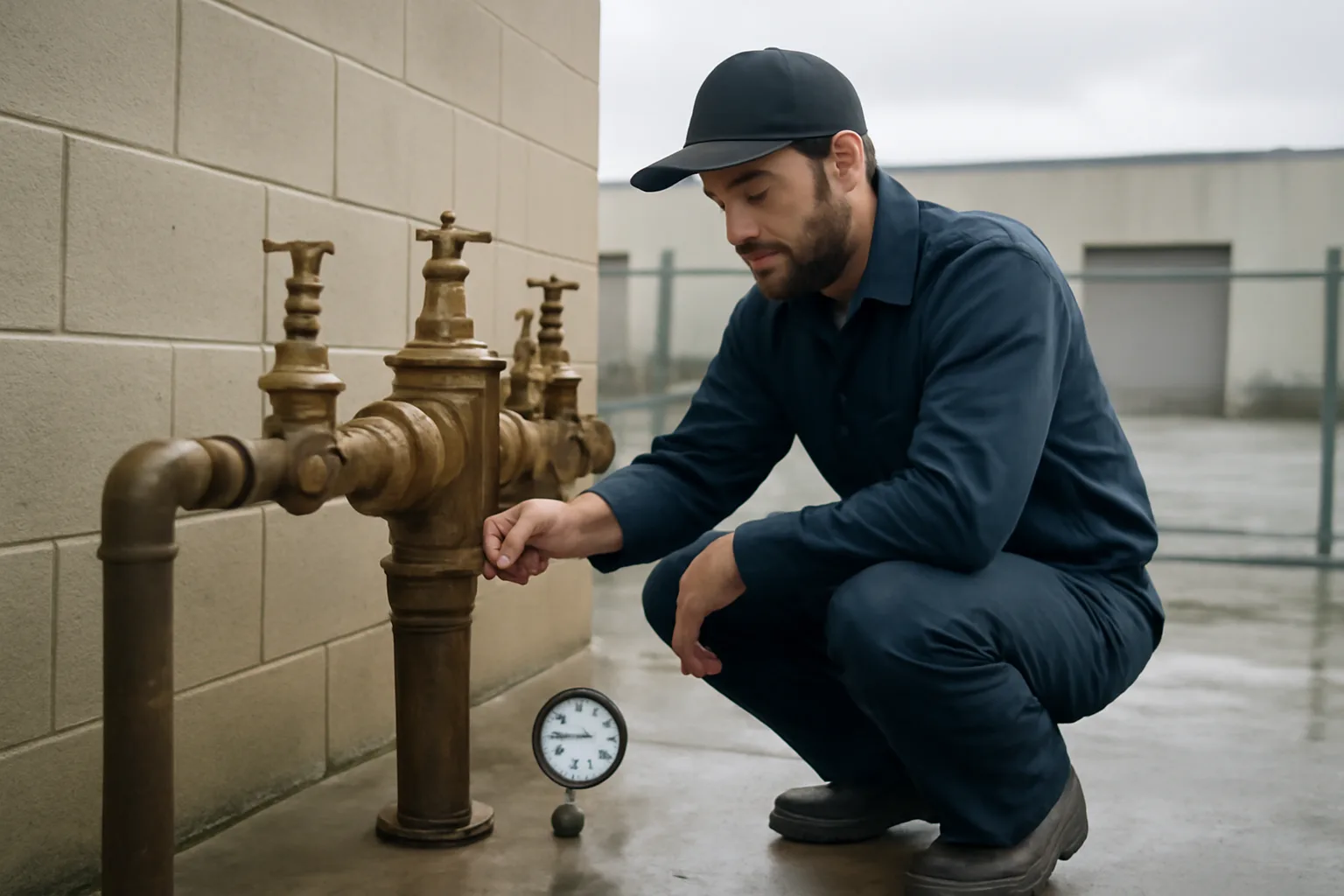
A backflow tester is the person a water purveyor or a state board accepts to field-test backflow prevention assemblies and sign the official report. You hook a differential gauge to the test cocks, watch how the checks and the relief valve behave, and file pass or fail paper the water system keeps for its cross-connection program.
You are not a federal licensee. EPA writes drinking-water rules. It does not mail tester cards. The public-health job is still real. EPA's Cross-Connection Control Manual (EPA 816-R-03-002) puts the hazard in one line: "Backflow is the undesirable reversal of flow of water or mixtures of water and other liquids, gases, or other substances into the distribution pipes of the potable supply of water from any source or sources." [1]
That reversal happens when downstream pressure (backpressure) or a supply-side vacuum (backsiphonage) beats the potable line. An RP, a double check, or a vacuum breaker is the mechanical answer. The tester is how the water system proves that answer still works.
Plumbing and testing overlap. They are not the same paper. A plumber can install the assembly. The utility may still refuse the test report unless your name is on their tester list. In a few states the contractor license and the tester credential get tangled together. In a lot of cities you can hold a tester card and still be barred from opening the device for repair. Confirm both with the board that owns the list.
Ignore anyone selling a national backflow tester license. ASSE, ABPA, AWWA, and USC issue credentials. Cities and states decide which ones count. That is the whole game.
How do you start as a backflow tester?
Start by finding who owns the tester list in the city you will actually work, then take only a course that list names. Pass the written exam and the live assembly exam. Apply to that board or utility. Show a gauge and a calibration certificate they will accept. Then test only where you are listed.
Call first. Ask which tester certifications they accept this year. Ask whether you also need a plumbing or contractor license. Ask which report form they want, paper or portal. Write it down. Do not pay a school until you can match the school's card to that list.
Most new testers sit an ASSE 5110 Backflow Prevention Assembly Tester course, an ABPA course, an AWWA course, or a USC FCCCHR tester course [10][11]. Texas does not play that way. Testers who work on public water systems there hold a TCEQ Backflow Prevention Assembly Tester license [7]. Washington writes the backflow assembly tester into WAC 246-290-490, and the purveyor's program has to use certified people [2]. Florida Rule 62-555.360 makes each community water system run a cross-connection control program, and the utility then tells you which cards it takes [3].
After the card, you still apply. Some listings are a form and a copy of the card. Some are a state occupational license with a fee table that changes. Confirm the current fee with that board. A national article that quotes your local fee is guessing.
Work stays local. Chase tests in two cities and you may need two listings. Budget for that.
Is there a national backflow tester license?
No. The Safe Drinking Water Act sets federal drinking-water rules. It does not issue a backflow tester card. 40 CFR 141.2 is the definitions section for the national primary drinking water regulations. It defines the public water system. It does not create a tester roster [13].
EPA published a manual, not a license. The 2003 Cross-Connection Control Manual tells systems how to build programs [1]. It does not put your name on a federal list.
What exists nationally are voluntary professional qualifications. ASSE Series 5000 includes ASSE 5110 for testers and ASSE 5115 for repairers [11]. Water systems and states may adopt those. They may ignore them. They may add a local exam on top.
Treat any "works in all 50 states" claim as marketing. Reciprocity is a board decision. Some states honor another state's course hours. Many will not. Ask before you move.
Nobody has a clean national count of working testers. State rosters do not add up to a U.S. total. Plan your path around one water system, then expand.
Which tester card do water boards actually accept?
Water boards accept the card named in their tariff, ordinance, or drinking-water rule. Common names are ASSE 5110, ABPA tester, AWWA tester, USC tester, and state occupational licenses such as the TCEQ BPAT [7][11]. The list is the authority, not the school's brochure.
California moved a lot of this into the State Water Resources Control Board Cross-Connection Control Policy Handbook. Read that program page before you pay a school [5]. California Health and Safety Code section 116800 is the statute backbone for those regulations [4]. Title 17, section 7605 is the older testing-and-maintenance rule people still quote for annual testing. The handbook is newer. Confirm with the water supplier which document they are using this year [15].
Washington's WAC 246-290-490 is blunt about program duties and certified personnel [2]. Oregon puts cross-connection duties on public water systems through its drinking-water program [9]. New York's sanitary code addresses cross-connection control in 10 NYCRR Subpart 5-1 [8]. Massachusetts writes it into 310 CMR 22 [14].
The pattern repeats everywhere. The drinking-water rule requires a program. The program requires testers. The tester credential is whatever that program printed.
| Place | Who owns the tester list | Typical path (confirm locally) |
|---|---|---|
| Texas | TCEQ occupational license | TCEQ BPAT [7] |
| Washington | Purveyor program under WAC 246-290-490 | Certified BAT [2] |
| Florida | Each community water system under 62-555.360 | Utility-accepted cert [3] |
| California | Water supplier plus CCC Policy Handbook | Board-listed cert [5] |
Work across city lines and you may need multiple listings. That is normal. Annoying. Normal.
How long is backflow tester school, and what is the exam?
Plan on a multi-day course with a written test and a live assembly test. Many ASSE 5110 and similar courses run in the 32 to 40 hour range. I have not seen a single federal hour count that binds every board, so treat 32 to 40 as the common school length, not a law. Confirm hours with the school and the board that will accept the card.
The hands-on part is the filter. You will test a reduced-pressure principle assembly (RP or RPZ), a double check (DC), and usually a pressure vacuum breaker (PVB) or spill-resistant vacuum breaker (SVB). You diagnose a failed check, a leaking shutoff, a relief valve that opens outside the spec window. You do it with a five-valve differential gauge.
Schools that skip live fail conditions are a waste of money. You will meet those fails in parking lots in the rain.
Bring the photo ID the school listed. Bring closed-toe shoes. If the board requires a separate application before the exam, file it first. People fail the paperwork more than the gauge.
Ask the school, in writing, which nearby utilities currently take the card. If they will not answer, pick another school.
What assemblies will you test in the field?
You will mostly test RPs, double checks, and vacuum breakers on fire lines, irrigation, boilers, medical equipment, and carbonated beverage systems. Air gaps are a method, not a gauge test. The International Plumbing Code Chapter 6 is one model-code path for protecting the potable supply [12]. USC's Foundation for Cross-Connection Control and Hydraulic Research publishes the List of Approved Backflow Prevention Assemblies that many agencies still treat as the product list [10].
| Assembly | Usual job | Gauge test |
|---|---|---|
| RP / RPZ | High hazard | Yes |
| Double check (DC / DCDA) | Low hazard, often fire | Yes |
| PVB / SVB | Irrigation, indoor process | Yes |
| Air gap | Physical break | No, you measure the gap |
High hazard versus low hazard is a local determination. Do not argue hazard with a water system from a blog. Their ordinance wins.
Fire-line double check detector assemblies (DCDA) and RPDA units add a bypass meter. Budget extra time. The bypass has its own assembly. If you cannot get both sides to test clean, that is a fail, not a "close enough."
Match make, model, and serial to the USC list or to whatever approval list your purveyor named. An unlisted assembly can pass a gauge and still get rejected on paper.
What paper do you file after a backflow test?
You file the form the water purveyor printed. Not a generic PDF you liked on a forum. Pass or fail, make, model, serial, size, location, line pressure, differential readings, relief-valve opening, shutoff tightness, tester name, cert number, gauge serial, calibration date. Some cities want electronic portals. Some still want carbon copies.
The paper is the product. A perfect test with a missing serial is a failed job.
Keep your own copy. Keep the calibration cert with the gauge serial that matches the report. When a board audits, they match three things: your cert, the gauge, the report.
California's older Title 17 language is the line most people still quote. "Backflow preventers shall be tested at least annually or more frequently if determined to be necessary by the water supplier." That is 17 CCR 7605 [15]. EPA's manual is built around that same annual rhythm for assemblies in a working program [1]. Texas 30 TAC 290.46 is the operating-practice rule public water systems there have to live with, including backflow assembly testing by a recognized tester [6].
If the assembly fails, you do not make it pass on paper. You tag it, notify the customer and the purveyor the way the local rule says, and come back after repair. Repair credentials are a different card in many places (ASSE 5115 or a plumbing license). Confirm who is allowed to rebuild an RP in your city.
How much does it cost to get started as a tester?
The honest stack is tuition, exam, credential application, listing fees, a gauge, calibration, insurance, and whatever contractor license your city stacks on. I will not invent your board's fee. Fees move.
Tuition is set by the school. State occupational applications (Texas TCEQ is the clean example) have their own fee tables. Confirm those on the TCEQ BPAT page before you write a check [7]. City listing fees live on the utility's backflow program page, not in a national roundup.
The gauge is the tool that hurts. A field differential gauge with fittings is a real purchase. Calibration is recurring, often yearly, sometimes more if you drop it. Ask the program what calibration lab and interval they want. Buying the cheapest no-name gauge that cannot hold a calibration cert is a waste of money.
Insurance is not optional if you touch customer property. Ask a licensed agent about general liability. I am not your insurance advisor.
For state-by-state cost walkthroughs, use local fee articles, not a made-up U.S. average. Start with backflow tester cost in california and backflow tester cost in florida if those are your markets.
Want the 5110/5115 paper in one binder? ASSEPath sells a $149 one-time Tester Kit. That is optional. The board still wants their form.
Do you need a plumbing license to test backflow?
Sometimes yes. Sometimes no. This is the question that burns people.
A tester credential lets you test. Opening an RP, replacing checks, and charging for repair is often plumbing work. Fire-line work can pull in a fire-protection contractor license. Irrigation can pull in a landscape license. Confirm with the state contractor board and the water purveyor. Get both answers. They do not always match.
If you only test and the utility allows third-party testers, you may operate on the tester card plus a business license. Advertise backflow testing and repair, and expect the contractor board to care.
Do not take legal advice from a course instructor who does not work in your county. Call the board.
ASSEPath is an independent publisher, not a law firm and not a service company. Your listing still comes from the agency that prints the list.
How often are assemblies tested, and when do testers recertify?
Assemblies are commonly tested at least once a year. California Title 17 section 7605 says at least annually, or more often if the water supplier says so [15]. EPA's 2003 manual is built around that annual cycle [1]. Texas public water systems operate under 30 TAC 290.46, where recognized-tester language and assembly testing duties show up in that state's package [6].
Your personal tester credential is a different clock. Recert windows are set by the credential body and by the local list. Three years is a number you will hear for several national cards. Do not treat that as universal. Washington, TCEQ, and city lists can be shorter or have CE hour add-ons. Confirm the expiration on your card and on the list.
Miss a recert and your reports start bouncing. The customer still needs a test. You just cannot sign it.
Some sites need tests more often than annually. Hospitals, chemical plants, and a few fire lines get pulled onto a shorter cycle because the purveyor said so. The local letter beats a national habit.
What first-year tester gear is worth buying?
Buy a gauge the local program will accept, fittings that match common test-cock threads, spare hoses, a shutoff-tool set that will not round stems, PPE, and a way to record serials in the rain. Get the gauge calibrated before your first paid test.
Waste of money: extra certification plaques, national directories that do not put you on the local list, and a second gauge before you have work. Also skip any course that will not tell you, in writing, which nearby utilities accept the card.
A truck wrap in year one is ego. Get listed first.
You need access to manufacturer repair parts only if you are actually allowed to repair. If you are test-only, do not stock checks just in case. That inventory expires and it invites you to do work your license does not cover.
A cheap adapter kit that leaks at the test cock will chase you all summer. Spend on fittings that seal. Cheap out on branded clothing.
How do backflow tester rules differ by state?
A lot. Texas licenses testers at TCEQ [7]. Washington defines the backflow assembly tester inside the drinking-water rule [2]. Florida requires the water system program and leaves tester acceptance largely to that program and local plumbing rules [3]. California now points testers at the Cross-Connection Control Policy Handbook plus local water supplier procedures [5]. Oregon, New York, and Massachusetts each write their own cross-connection sections [8][9][14].
Fees, forms, and whether you need a plumbing license change at the county line. Use state cost pages when you are pricing the paper: Backflow Tester Cost in Arizona: License, Fees, and Timeline, backflow tester cost in colorado, backflow tester cost in georgia, backflow tester cost in connecticut, and backflow tester cost in idaho.
Do not assume California rules apply in Idaho. They do not.
Work a border metro and you should read both states before you print business cards. Reciprocity is not automatic. Some boards want their own exam even if you already hold ASSE 5110.
What should you do this week to become a tester?
Pick the city you will actually work in. Download that water system's backflow tester page or call the cross-connection specialist. Ask which credentials they accept this year. Ask for the test form. Ask if they need a copy of your gauge calibration.
Then pick a school that issues that credential. Pay the school. After you pass, file the listing or the state application the same week. Do not wait. Lists lag.
Confirm every fee and processing time with the board. I will not guess them. There is no honest nationwide processing time, and I will not pretend there is an approval guarantee.
Want kit paper for ASSE 5110/5115 after you know your board? ASSEPath keeps that path at /start. The board still has the last word.
Frequently asked questions
What is a backflow tester?
A backflow tester is the person a water purveyor or state board accepts to field-test backflow prevention assemblies and sign the report. You are not federally licensed. You use a differential gauge, record pass or fail data, and file the form that local program printed. Confirm who owns the tester list before you spend on school.
How do you start backflow tester?
Find who owns the tester list where you will work. Take only a course that list names, pass written and hands-on exams, then register or license with that board. Buy a gauge they will accept, with a current calibration cert. Confirm fees and forms with the board. Do not pay a school first and hope the card transfers.
Is ASSE 5110 required in every state?
No. ASSE 5110 is a widely used tester qualification, not a U.S. license. Texas uses a TCEQ BPAT license. Many utilities accept ASSE, ABPA, AWWA, or USC cards. Some accept only one of those. Read the local list for the year you will test, then pick the school that matches it.
Can I test backflow without a plumbing license?
In some cities yes, if you are test-only and the utility lists third-party testers. Repair, rebuild, or replacement is often plumbing or fire-protection work. Contractor boards and water purveyors do not always agree. Get both answers in writing before you advertise testing and repair on the same card.
How often must a backflow preventer be tested?
Most programs test at least annually. California Title 17 section 7605 says at least annually, or more often if the water supplier requires it. EPA's 2003 Cross-Connection Control Manual is built around that annual cycle. Your local purveyor can shorten the interval. Their letter beats a national habit.
What is the difference between ASSE 5110 and 5115?
ASSE 5110 is the tester qualification. ASSE 5115 is the repairer qualification in the same Series 5000 family. A tester card does not automatically let you open an RP and replace checks. Many cities split test and repair on purpose. Confirm which card, plus any plumbing license, your board wants for rebuilds.
Does EPA license backflow testers?
No. EPA published the Cross-Connection Control Manual (EPA 816-R-03-002) and runs Safe Drinking Water Act rules under 40 CFR Part 141. Those documents do not create a federal tester roster. States and water systems own the lists. Treat any federal tester license pitch as a myth.
Do I need a USC-listed assembly for the test to count?
Many agencies still use USC's List of Approved Backflow Prevention Assemblies as the product list. An unlisted assembly can look fine on a gauge and still get rejected on paper. Match make, model, and size to whatever approval list your purveyor named. Confirm that list, not a forum screenshot.
How do I get on a water utility tester list?
After you hold an accepted credential, file whatever application that utility or state board printed. They usually want the card, photo ID, and a gauge calibration cert that matches the serial you will print on reports. Confirm the current fee and any processing time with that office. Lists lag, so file the same week you pass.
What happens if an assembly fails the test?
You record a fail, tag it the way the local rule says, and notify the customer and the purveyor on their timeline. You do not mark it pass because the customer is in a hurry. Repair may require a different credential than testing. Come back after the rebuild and run a full test again.
How often do I recertify as a backflow tester?
That is set by the credential body and by the local list, not by a national clock. Three years is a number you will hear for several national cards. Do not treat it as universal. TCEQ, Washington, and city lists can differ and may add CE hours. Read the expiration on your card and on the list.
Can I test fire-line assemblies on a tester card alone?
Sometimes the utility will accept a tester card on a fire-line DCDA or RPDA. Repair, isolation, and fire-protection contracting are separate questions. Some cities want a fire-protection contractor for anything beyond a gauge test. Ask the water purveyor and the contractor board before you bid a fire line.
What gauge do I need to test backflow assemblies?
A field differential pressure gauge the local program will accept, usually a five-valve setup, plus fittings that match common test-cock threads. Ask which calibration interval and which lab they want, often yearly. Cheap gauges that cannot hold a cert waste the whole first year. Match the gauge serial on every report.
Are online-only backflow tester courses accepted?
Usually not as a complete path, because boards want a live performance exam on actual assemblies. A written-only course is a common way to burn tuition. Ask the water system if they will list a card that had no hands-on fail conditions. If they say no, pick a school with a wet lab.
Sources
- U.S. EPA, Cross-Connection Control Manual (EPA 816-R-03-002): EPA's 2003 manual defines backflow as undesirable reversal of flow into potable distribution piping and is the federal program manual for cross-connection control, not a tester license.
- Washington State Legislature, WAC 246-290-490 Cross-connection control: Washington's drinking-water rule requires purveyor cross-connection programs and certified backflow assembly testers.
- Florida Department of State, Rule 62-555.360 Cross-Connection Control for Public Water Systems: Florida requires community water systems to establish and implement cross-connection control programs that then govern local tester acceptance.
- California Legislative Information, Health and Safety Code section 116800: California HSC 116800 is the statutory backbone for state backflow and cross-connection regulations.
- California State Water Resources Control Board, Cross-Connection Control Policy Handbook: California's Cross-Connection Control Policy Handbook is the current state program document testers and water suppliers must read alongside local procedures.
- Texas Secretary of State, 30 TAC §290.46 Minimum Acceptable Operating Practices: Texas public water systems must follow 30 TAC 290.46 operating practices, including backflow assembly testing by a recognized tester.
- New York State Department of Health, 10 NYCRR Subpart 5-1 Public Water Systems: New York's sanitary code includes a dedicated cross-connection control section in Subpart 5-1 that public water systems must follow.
- Oregon Health Authority, Cross Connection / Backflow Prevention program: Oregon's public health drinking-water program administers cross-connection and backflow requirements for public water systems.
- USC Foundation for Cross-Connection Control and Hydraulic Research, List of Approved Backflow Prevention Assemblies: Many agencies still treat USC's approved-assemblies list as the product list testers must match on make, model, and size.
- ICC, International Plumbing Code 2021 Chapter 6 Water Supply and Distribution: IPC Chapter 6 is a model-code path for protecting the potable water supply, including backflow prevention assemblies testers encounter in the field.
- eCFR, 40 CFR 141.2 Definitions (National Primary Drinking Water Regulations): Federal drinking-water regulations define public water systems and related terms but do not license backflow testers.
- Massachusetts Department of Environmental Protection, 310 CMR 22 Drinking Water Regulations: Massachusetts drinking-water regulations (310 CMR 22) include cross-connection control requirements administered at the state level.
- California Code of Regulations, Title 17 section 7605 Testing and Maintenance of Backflow Preventers: 17 CCR 7605 requires backflow preventers to be tested at least annually or more frequently if the water supplier determines it necessary.